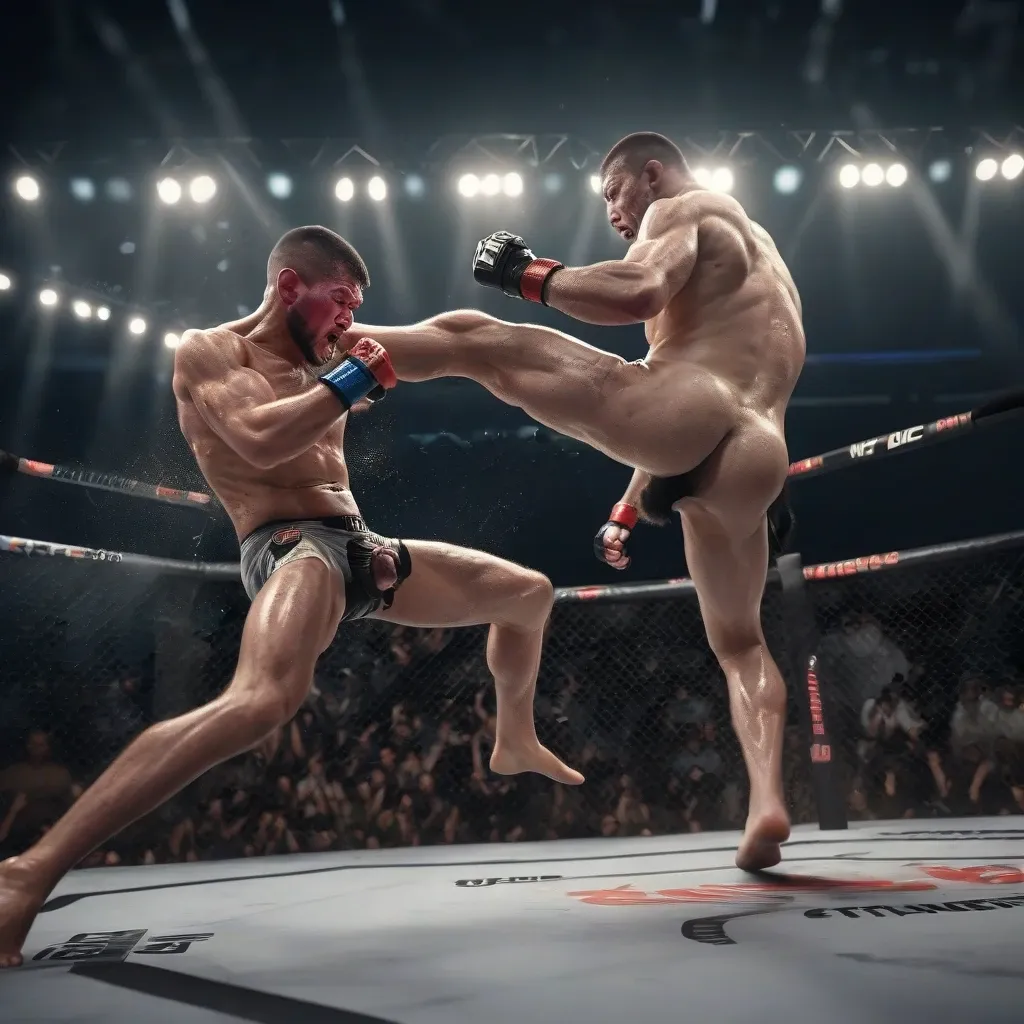
I was glued to the screen last weekend, watching a UFC event, when suddenly – BAM! A fighter landed a perfectly timed head kick, and his opponent went down. The crowd erupted, and I found myself jumping out of my seat. That’s the magic of a UFC knockout. It’s a sudden, explosive moment that can change the entire course of a fight and leave fans in awe.
Knockouts are the ultimate highlight reel material. They represent the raw power, precision, and split-second decision-making that define mixed martial arts (MMA). The thrill of seeing a fighter’s lights go out is undeniable, and it’s a major reason why millions of people tune in to UFC events worldwide.
This article is a deep dive into the world of UFC knockouts. Consider it an expert analysis of what makes them so devastating. From the various techniques and strategies employed by fighters to the underlying psychology of both the attacker and the defender, we’ll explore every aspect of these electrifying moments. Get ready to discover the science and art behind the UFC’s most spectacular knockouts and the crucial elements that make them so appealing.
The Anatomy of a UFC Knockout
A knockout in the UFC is not just about brute strength; it’s a science, a brutal ballet of technique, timing, and precision. Several elements must align to deliver that fight-stopping blow. This section explores the crucial components that contribute to a successful knockout, dissecting the mechanics and strategies employed by elite fighters.
The Puncher’s Stance
The foundation of any devastating strike begins with the stance. A balanced and grounded stance is vital for generating power and maintaining stability. Weight distribution is key, typically favoring the rear leg to load up strikes. Foot placement dictates movement and angle creation. A proper stance allows a fighter to transfer energy efficiently from the ground up, maximizing the force behind each punch or kick. Fighters like Conor McGregor have demonstrated the effectiveness of a well-developed stance for striking.
Kinetic Chains and Power Generation
The kinetic chain is the sequence of coordinated movements that transfer energy from the ground up to the point of impact. Power generation begins in the legs, with a push-off that initiates rotation through the hips and core. This rotational force is then transferred through the shoulders and into the arm, culminating in a forceful strike. Proper body mechanics are essential for maximizing power transfer. Strikes like the overhand right exemplify the importance of the kinetic chain, utilizing the entire body to generate fight-ending force.
The Psychology of a Knockout
The knockout in combat sports is not just a physical phenomenon; it’s a brutal intersection of strategy, physical prowess, and raw mental fortitude. Delivering that fight-ending blow requires a unique psychological profile, a blend of unwavering focus, calculated aggression, and the ability to compartmentalize the potential consequences. Some fighters cultivate a cold detachment, viewing their opponent as an obstacle to be overcome, while others tap into a primal intensity, fueled by adrenaline and a deep-seated need to dominate. The impact of a knockout on the receiving fighter can be profound, potentially leading to a cascade of emotional and psychological effects that extend far beyond the physical trauma – self-doubt, fear of future fights, and even long-term cognitive changes. The line between victory and defeat is razor-thin, often determined by the mental game as much as physical attributes.
The Fighter’s Mindset
The psychological implications of engaging in a violent sport like mixed martial arts or boxing are complex. Fighters have to reconcile the inherent aggression with the discipline and control required to execute a game plan. Visualization plays a key role, mentally rehearsing scenarios and solidifying their belief in their ability to win. Confidence is paramount; a fighter who doubts themself is already at a disadvantage. It demands mental resilience and the ability to channel emotions effectively, transforming fear into focused aggression and anxiety into strategic calculation.
The ‘kill-or-be-killed’ mentality
The pressure in high-stakes combat sports can be immense. Fighters face internal pressure to perform, external pressure from coaches and fans, and the ever-present pressure of potential physical harm. This environment can breed anxiety and fear, emotions that can either paralyze or be harnessed as fuel. The ‘kill-or-be-killed’ mentality, while seemingly extreme, reflects the stark reality of the sport: only one fighter can emerge victorious. This mindset can sharpen focus, intensify determination, and provide the edge needed to overcome an opponent.

Fight Analysis – UFC Vegas 114
UFC Vegas 114 delivered a night of unforgettable moments and strategic clashes. The card proved to be a rollercoaster for fans, with unexpected upsets and dominant performances that left audiences and commentators buzzing. The fights showcased a blend of seasoned veterans and rising stars, each hungry to make their mark in the octagon. The energy was palpable, making it a standout event in the UFC calendar. Let’s dive into some of the highlights.
Kevin Vallejos vs. Josh Emmett
The clash between Kevin Vallejos and Josh Emmett was a study in contrasts. Vallejos, known for his explosive power and relentless aggression, stepped into the ring with a reputation for finishing fights early. His aggressive style often overwhelms opponents, making him a formidable force in the heavyweight division. Emmett, on the other hand, brought a calculated and technical approach. With a background in wrestling, he expertly blends striking with grappling, making him a difficult matchup for anyone. Emmett is a strategic fighter, and his ability to control the pace of the fight is one of his best skills. The fight was a testament to their different styles.
Gillian Robertson vs. Amanda Lemos
Gillian Robertson, a grappling ace with a knack for submissions, faced off against Amanda Lemos, a powerful striker known for her swift and decisive blows. Robertson’s ground game is among the best in the division, with numerous submission victories showcasing her expertise. Her ability to transition smoothly between positions makes her a constant threat on the mat. Lemos, however, posed a significant threat on her feet. With incredible knockout power, her strikes can change the course of a fight in an instant. Lemos is a fearless competitor, always willing to engage and exchange, making her fights some of the most exciting to watch. Their fight was highly anticipated, with fans eager to see whose style would prevail.
Iconic Knockouts in UFC History
The UFC, a realm of controlled chaos, has always been defined by its electrifying knockouts. These aren’t just wins; they’re moments etched in time, fight highlights replayed endlessly, and stories whispered among fans. They shift careers, define legacies, and become integral parts of UFC history. Here are a couple of iconic examples that shook the foundations of the sport.
Anderson Silva vs. Vitor Belfort
UFC 126, February 5, 2011. The world held its breath. Anderson “The Spider” Silva, a seemingly untouchable champion, faced fellow Brazilian legend Vitor Belfort. The tension was palpable. Then, it happened. A precise front kick from Silva landed flush on Belfort’s chin. Belfort crumpled instantly, a sudden and shocking end. The strike’s originality and Silva’s unflinching timing made it a knockout talked about to this day. This fight cemented Silva’s dominance and added another unbelievable highlight to his already impressive reel.
Holly Holm vs. Ronda Rousey
UFC 193 in Melbourne, Australia, saw the seemingly invincible Ronda Rousey defend her title against Holly Holm. Rousey, a crossover star, was heavily favored, her aura of invincibility at its peak. Holm, a former boxing champion, was the underdog. But Holm, with her calculated strategy, kept Rousey at bay. In the second round, a head kick as clean as could be landed, sending shockwaves through the MMA community. Rousey fell, her reign over. Holm’s victory marked not just an upset, but the end of an era, proving that anything can happen in the octagon and showcasing the dynamic spectacle of mixed martial arts.

Training for Power and Precision
Strength and Conditioning for Knockout Power
Unlocking knockout power isn’t just about brute strength; it’s about cultivating explosive force. Strength training lays the foundation. Think compound movements – squats, deadlifts, bench presses, and overhead presses. These exercises engage multiple muscle groups simultaneously, building a robust base for power generation. Emphasize lifting heavy with proper form. As strength increases, incorporate plyometrics. Plyometrics bridge the gap between strength and speed, teaching your muscles to contract rapidly. Box jumps, medicine ball throws, and plyometric push-ups are excellent choices. These drills develop the fast-twitch muscle fibers crucial for delivering devastating blows.
Technical Drills for Precision Striking
Power is useless without precision. Technical drills are paramount in honing accuracy and refining striking technique. This means countless repetitions of fundamental strikes – jabs, crosses, hooks, and uppercuts – focusing on proper form, footwork, and body mechanics. Shadowboxing is invaluable for visualizing and practicing combinations. Bag work allows you to transfer technique into power, developing impact and stamina. Sparring, however, is where it all comes together. Controlled sparring sessions provide the opportunity to test skills against a live opponent, adapt to dynamic situations, and refine timing and distance. Don’t treat sparring sessions as a ultimate battle; focus on learning, experimenting, and improving technique.
The Future of UFC Striking
The evolution of UFC striking is a dynamic process, constantly shaped by emerging fighters, evolving strategies, and a relentless pursuit of the knockout. As MMA matures, striking is no longer a secondary skill but a critical component of a complete fighter’s arsenal. We’re moving beyond rudimentary boxing and Muay Thai, instead with a sophisticated blend tailored for the unique demands of the octagon.
One notable trend is the increased emphasis on fight IQ in striking exchanges. Fighters are not only throwing powerful combinations, but they are also reading opponents, exploiting openings, and adapting their approach mid-fight. This involves feints, level changes, and subtle shifts in stance to create opportunities for devastating strikes. We see less reliance on brute force and more on calculated precision.
Emerging fighters are experimenting with techniques borrowed from various martial arts backgrounds, including unorthodox angles and unpredictable movements. This fusion of styles makes it harder to prepare for specific opponents. Expect to see a greater emphasis on agility, footwork, and the ability to seamlessly transition between striking and grappling. The future of UFC striking is about versatility, adaptability, and a constant search for innovative ways to deliver the fight-ending blow. The technicality of striking is being emphasized because the level of the competition is also rising.